
Accounting · Coming soon
Open-source books — shipping when shared Postgres is ready
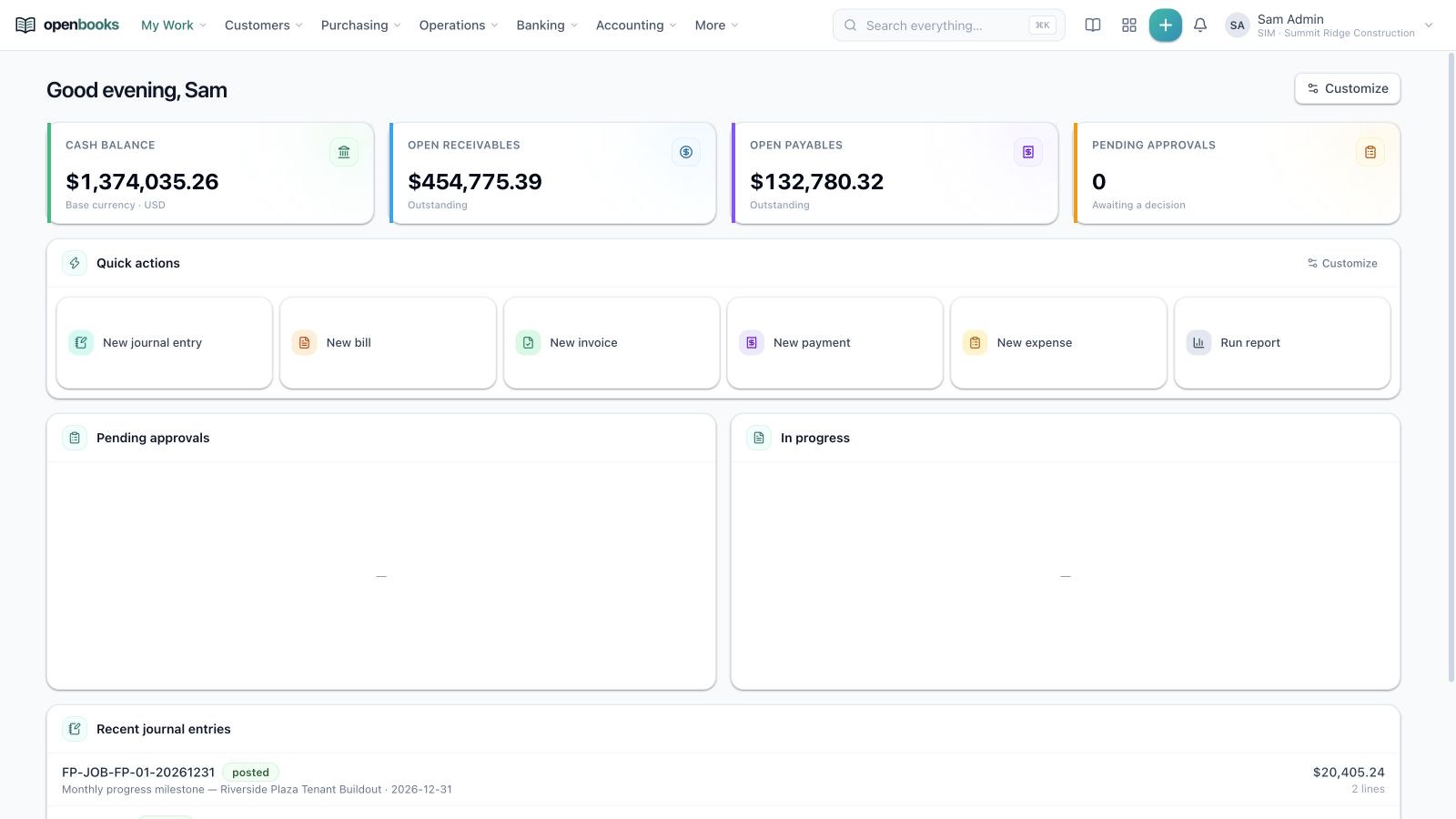
OpenBooks is an accounting-first ERP with optional Canada/US payroll. On StackBlaze it is not open for deploy yet: bootstrap needs CREATE ROLE, and our shared plans use communal Postgres without that privilege. Dedicated Postgres works but burns a limited volume slot per install. Upstream is adding a precreated-roles mode; we will wire communal and open deploy after that lands.
TemplatesOpenBooks
What OpenBooks is
Double-entry books, projects, optional payroll
Alpha software from the OpenBooks project. Evaluate with test or parallel books before production financials.
PostgreSQL-enforced ledger
Double-entry accounting with row-level security in Postgres — not a spreadsheet with a UI.
Projects and job costing
Track work and cost against the same books you close the period on.
Optional US / Canada payroll
Payroll packs are off by default. Turn them on in Company Settings when you are ready to evaluate.
Coming to StackBlaze shared plans
We will not ship dedicated Postgres per install on shared zones. Deploy opens once communal precreated-roles is supported upstream.
Availability
Not open for deploy on shared plans yet
Other StackBlaze apps migrate as a single tenant Postgres LOGIN. OpenBooks creates roles such as openbooks_read at bootstrap. That needs privileges communal tenants do not have. Granting CREATEROLE is not acceptable. We asked upstream for a precreated-roles mode and will enable the template when that ships.
This stack
Web
OpenBooks server
Worker
Background worker
PostgreSQL
managed database · TCP:5432
Valkey
managed cache · TCP:6379
Tenant
managed other
platform SMTP when the pipeline has mail
- Status
- Catalog listed · deploy held
- Blocker
- Bootstrap CREATE ROLE on communal Postgres
- Upstream
- github.com/braedonsaunders/openbooks/pull/29
After you deploy
- 1
Do not deploy from the dashboard yet
A one-off dedicated Postgres install consumes a vSphere volume slot. Wait for communal support.
- 2
Follow the upstream proposal
Precreated-roles skips CREATE ROLE when the platform has already granted openbooks_read to the tenant login.
- 3
We will update this page when it is ready
Deploy will point at the dashboard template again once the image and our communal hook land.
Why the wait
Communal Postgres is the only path that scales
Shared zones fix a small number of database volumes for every tenant. Per-app dedicated Postgres does not fit that model.
How other templates work
n8n, Twenty, Outline, and Listmonk use one constrained LOGIN for migrate and runtime — no CREATE ROLE at boot.
What OpenBooks needs
openbooks_read (and usually a runtime role) created at bootstrap, plus SET ROLE openbooks_read for the SQL console.
What we will not do
Grant tenants CREATEROLE, or leave every OpenBooks install on a dedicated smart PVC.
What we will do
Platform-grant openbooks_read on communal provision, then collapse the template to the standard $(PGUSER) contract.
Compare
OpenBooks on StackBlaze vs hosted accounting
| Feature | OpenBooks on StackBlaze (when ready) | Hosted accounting |
|---|---|---|
| Data location | Books live on your StackBlaze instance. | Books live in vendor-operated infrastructure. |
| Install model | One-click on communal Postgres (upcoming). | Create a vendor account and use their shared platform. |
| Payroll | Optional US/Canada packs in the open-source project (alpha). | Usually a paid add-on or separate payroll product. |
| Operations | You control updates, scale, backups, and the instance lifecycle. | The vendor operates the platform and the limits. |
Deploy is held until communal Postgres support lands. Product comparison assumes that path.
FAQ
OpenBooks on StackBlaze
Not from the StackBlaze catalog on shared plans. Dedicated Postgres works technically but we are not offering that path because of volume limits. Wait for communal support.
OpenBooks is coming to shared plans
Deploy opens after communal Postgres support. Track upstream in the meantime.